
AI News — May 2026
In this issue, we explore the profound transformation of artificial intelligence as it moves beyond simple assistance into autonomous systems writing their own code, on-device intelligent teammates, health technologies unlocking the mysteries of the human brain, and language models decoding history’s encrypted secrets.
- By
- AIS Research & Publishing
- Published
- min read
- 15
- Also available in
- Türkçe
Welcome to the May 2026 Issue of the BAU AI Society AI NEWS Newsletter
In this issue, we explore the profound transformation of artificial intelligence as it moves beyond simple assistance into autonomous systems writing their own code, on-device intelligent teammates, health technologies unlocking the mysteries of the human brain, and language models decoding history’s encrypted secrets.
May 2026 has been a month of redrawn boundaries in the AI ecosystem. At Google I/O 2026, CEO Sundar Pichai highlighted an astronomical volume of 480 trillion tokens processed monthly and the Gemini app surpassing 1.2 billion users, underscoring the massive scale of AI adoption. Concurrently, Anthropic’s revelation that over 80% of its merged codebase is now authored autonomously by Claude proves that we have officially entered the era of recursive self-improvement.
On the hardware front, NVIDIA unveiled the RTX Spark superchip in partnership with MediaTek, alongside deep Adobe integrations, aiming to reinvent Windows PCs as active on-device teammates. Meanwhile, an MIT study led by David Autor analyzed how AI waves might shape workforce demographics and either democratize or erode human expertise. In medical science, Beacon Biosignals is using clinical-grade home EEG and AI to map the brain during sleep, while computational linguists cracked the 400-year-old Vatican Borg Cipher in just 29 minutes, showcasing the autonomous power of AI in scientific and historical discovery.
These developments reveal that the AI race is no longer confined to chat interfaces. Instead, it has evolved into a multi-dimensional battle for autonomy spanning operating systems, scientific research, historical archives, and the software development lifecycle itself.
We hope you enjoy this insightful read.
Technology usually creates jobs for young, skilled workers. Will AI do the same?
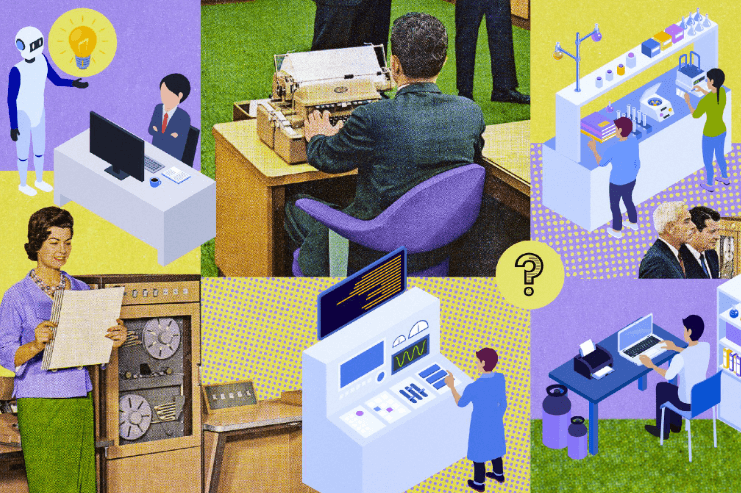
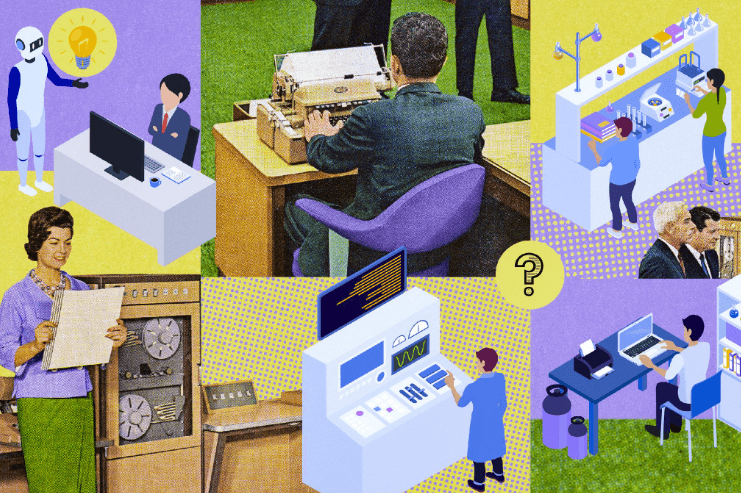
Analyzing how technological innovations historically shape workforce demographics.
A new study of U.S. employment led by MIT labor economist David Autor sheds light on how technological innovations shape the workforce. Historically, new tech-enabled jobs have been filled by young, college-educated workers in urban environments. As artificial intelligence spreads, researchers are examining whether this next wave of innovation will follow the patterns of history or fundamentally alter the value of human expertise.
The Dual Face of Innovation: Replacement vs. Creation
At any given time, technology exerts a dual force on employment. It replaces traditional jobs while simultaneously creating entirely new lines of work.
- Job Replacement: Machines replace farmers, automated systems replace factory workers, and software replaces manual clerks. This automation improves efficiency but displaces traditional labor.
- Job Creation: Entirely new occupations emerge from technological advancement. In fact, a previous study by the authors found that about 60% of U.S. jobs today did not even exist in 1940.
- The Postwar Trend: By analyzing U.S. Census Bureau data from 1940 to 2018, the researchers mapped how postwar technology-enabled work created massive shifts in specialized occupations.
“We had never before seen exactly who is doing new work. It’s done more by young and educated people, in urban settings.”
— David Autor
Who Gets the New Work? The Demographics of Innovation
New tech-enabled occupations are always tied to new forms of expertise. Initially, this specialized knowledge is scarce and highly valued.
- The Young and Educated: Historically, new occupations are overwhelmingly captured by young, college-educated individuals who are quick to adopt and master new capabilities.
- Urban Settings: New work tends to cluster in urban areas where new technologies are first deployed and where specialized labor markets are most active.
- The Value of Expertise: What makes human labor valuable is not simply the ability to do tasks, but the possession of specialized, scarce knowledge.
Demand-Driven Growth: Government and Large-Scale Investments
The study also reveals a powerful, large-scale insight: a lot of innovation-based new work is driven by external demand and investments.
- Funding Specialization: Government-backed expansion of research, defense, and space exploration after World War II created whole new sub-ecosystems of specialized occupations.
- Downstream Effects: Wherever society makes large-scale investments, new specializations naturally emerge. If you create a large-scale activity, there’s a downstream effect of new occupations.
The AI Era: Rebuilding Expertise or Eroding Value?
While learning about historical shifts is relevant, David Autor observes that the current AI wave represents a different set of dynamics.
- Task Erosion: People are worried that AI-based automation is going to erode specific cognitive tasks much more rapidly than previous technologies.
- Eroding Tasks vs. Jobs: Eroding tasks is not the same thing as eroding jobs. However, if AI makes it much easier to write, code, draft contracts, or diagnose diseases, the market value of human expertise could shift.
- Democratic Expertise: If AI democratizes specialized knowledge, making everyone an expert, it raises a critical question: does it make human labor more or less valuable? “If everyone is an expert, then no one is an expert,” Autor notes.
Source: Technology usually creates jobs for young, skilled workers. Will AI do the same? | MIT News
Beacon Biosignals is mapping the brain during sleep
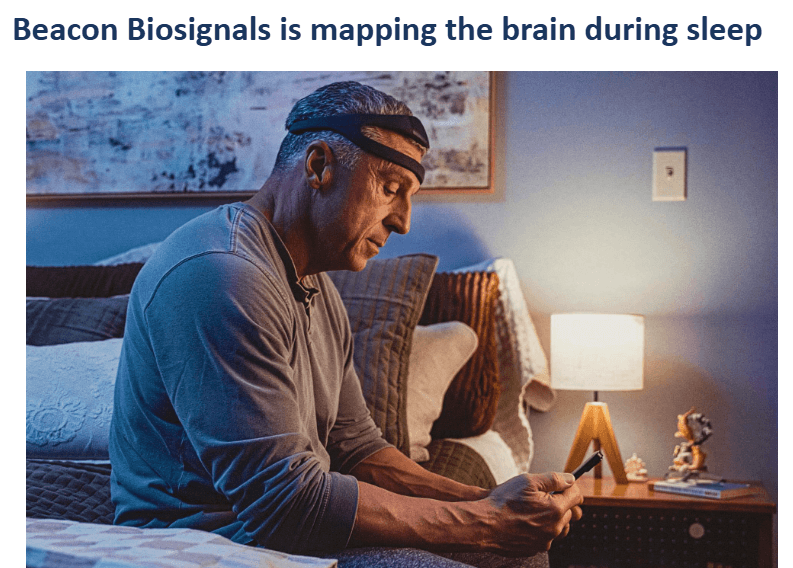
Beacon Biosignals maps brain functions using clinical-grade EEG tracking at home.
The human brain remains one of the most fascinating and perplexing mysteries in medicine, with scientists still struggling to match complex neurological activity with heterogeneous symptoms. Beacon Biosignals is working to make sense of the brain by monitoring its activity while people sleep, using advanced machine learning to build a foundation model of brain health.
The Sleep Window: Why Sleep is Key to the Brain
From its early days, Beacon has been focused on sleep as a critical diagnostic window to understand neuropsychiatric and neurodegenerative conditions.
- Hyperactive Neurons: Neural activity during sleep can be an order of magnitude higher and far more structured than in the waking state, making it ideal for detecting anomalies.
- Heterogeneous Disorders: By analyzing sleep, researchers can better decode complex brain diseases that manifest differently in every patient.
Bringing the Lab to the Bedroom: Clinical-Grade Home EEG
Moving clinical-grade brain monitoring from expensive and uncomfortable sleep labs directly to the home environment changes what is possible.
- At-Home EEG: Beacon’s FDA 510(k)-cleared medical device allows patients to collect clinical-grade EEG data in the comfort of their own beds.
- Longitudinal Data: The company collects lab-grade data on each patient for multiple sequential nights, resulting in a higher quality and more comprehensive assessment.
- Accelerating Treatment: Beacon partners with pharmaceutical companies to run more efficient clinical trials for central nervous system drugs, accelerating their path to patients.
Building the Brain’s Foundation Model
With each new patient deployment, Beacon gathers more data to train its advanced AI computation and analytics platform.
- The Translation Engine: Beacon is rapidly creating an unprecedented, longitudinal dataset of brain activity to serve as a translation engine for brain health.
- Digital Biomarkers: Machine learning algorithms parse massive EEG records to identify digital biomarkers linked to clinical outcomes with high precision.
HST Roots and a Vision for Brain Health
The foundation of Beacon Biosignals stems from CEO Jake Donoghue’s training in the Harvard-MIT Program in Health Sciences and Technology (HST).
- The Measurement Gap: Donoghue was struck by the inability to measure brain function in the longitudinal ways that cardiologists can monitor heart function.
- Understanding the Organ: Co-founded with HST and Harvard Medical School mentors, the business was built to understand the brain as a start to tackling neuropsychiatric diseases.
Source: Beacon Biosignals is mapping the brain during sleep | MIT News
NVIDIA Unveils RTX Spark: The ‘Teammate’ Superchip Built for Personal AI Agents
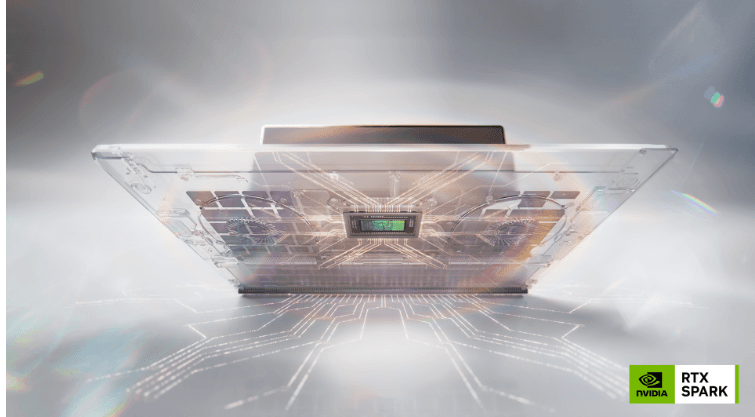
NVIDIA RTX Spark superchip reinvents Windows PCs for autonomous on-device AI agents.
At NVIDIA GTC Taipei, NVIDIA introduced NVIDIA RTX Spark™, a groundbreaking superchip that fundamentally reinvents Windows PCs for the era of personal AI agents. By bringing together 30 years of NVIDIA architecture into a single platform, this new superchip transforms the personal computer from a basic tool into an active, intelligent teammate.
The Superchip Architecture: Grace Meets Blackwell
The RTX Spark architecture is engineered to deliver immense processing power while maintaining all-day battery life in slim laptops and ultra-efficient desktop PCs.
- The Hardware Mix: The superchip combines an NVIDIA Blackwell RTX GPU (featuring 6,144 CUDA cores and fifth-generation Tensor Cores with FP4 precision) with a high-performance, 20-core NVIDIA Grace™ CPU.
- The MediaTek Partnership: NVIDIA collaborated with mobile design leader MediaTek on the custom CPU architecture, contributing to its best-in-class power efficiency and connectivity.
- Massive Muscle: To handle demanding local processing, the chip packs up to 1 petaflop of AI compute and 128GB of unified memory.
“The PC is being reinvented. For forty years, you launched apps. Click. Type. With RTX Spark and Microsoft Windows, you ask — and the PC does the work.”
— Jensen Huang, Founder and CEO of NVIDIA
Purpose-Built for Personal Agents: Security Localized
While open-source AI projects like OpenClaw and Hermes Agent have surged in popularity, broad adoption has been limited by privacy concerns. NVIDIA and Microsoft are partnering to deliver a secure, native Windows platform for on-device agents.
- Windows Primitives: New OS-level security primitives provide containment, identity tracking, and policy control directly from the Windows taskbar.
- NVIDIA OpenShell™: This runtime lets users define strict agent boundaries, automatically routing data to local models or disguising personal information before it hits the cloud.
- Cross-App Workflows: With a secure framework, local agents can safely execute multi-step tasks across Windows applications, code plug-ins, and semantically search local files.
“RTX Spark and NVIDIA OpenShell give Hermes users a powerful and secure environment for agents to run and work alongside you. You realize you’re buying a full-fledged assistant, not a typical laptop.”
— Dillon Rolnick, CEO of Nous Research
Full-Stack Creative and Gaming Dominance
Beyond running AI assistants, RTX Spark delivers NVIDIA’s complete graphics and AI development stack to creators and gamers alike.
- Next-Gen Rendering: Powers DLSS 4.5 Ray Reconstruction featuring a second-generation transformer model (coming to Blender 5.3) and brings 4x Frame Generation to ComfyUI.
- Creator Scale: Users can fluidly render ultra-large 90GB 3D scenes using OptiX, edit 12K video, and locally run massive 120-billion-parameter large language models.
- AAA Gaming: Gamers can run intensive titles at 1440p resolution at over 100 frames per second with full ray tracing, DLSS, and NVIDIA Reflex enabled.
Rearchitecting Adobe: An AI-Native Creative Pipeline
In a major ecosystem move, NVIDIA is partnering with Adobe to completely rearchitect flagship creative tools to tap directly into RTX Spark’s unified memory and Blackwell GPU infrastructure.
- Adobe Photoshop: Optimized for live filters, modern natural brushing, and up to 2x faster Firefly-powered Generative Fill.
- Adobe Premiere: Features a rebuilt video pipeline for real-time editing, color correction, and GPU-accelerated AI tools like Generative Extend.
- Collaborative AI: Both applications will integrate seamlessly with Windows agents, allowing creators to use an on-device AI as a collaborative design partner.
“Together, we are building AI-native creative experiences for RTX Spark that deliver the performance, intelligence and responsiveness people need to create at the pace of their ambition.”
— Shantanu Narayen, Chair and CEO of Adobe
Premium Designs & Availability
Major hardware manufacturers — including ASUS, Dell, HP, Lenovo, Microsoft Surface, and MSI — are already developing premium systems around the new architecture. RTX Spark laptops will measure as slim as 14 millimeters, weigh just three pounds, and feature color-accurate tandem OLED displays with G-SYNC technology. For enterprise developers looking to scale up, NVIDIA is also introducing the DGX Station™ for Windows, putting a Blackwell-powered AI supercomputer directly at their desks. Systems from leading manufacturers are expected to roll out starting this fall.
Source: NVIDIA and Microsoft Reinvent Windows PCs for the Age of Personal AI | NVIDIA Newsroom
Cracking History’s Cold Cases: How AI is Unlocking Ancient Secret Codes

AI tools are fast-tracking the decryption of encoded historical manuscripts found in archives.
Historic messages and documents obscured by incomprehensible ciphers can be found in libraries and archives all over the world. Today, artificial intelligence is helping historians crack open these mysterious, long-hidden texts — allowing researchers to recover lost narratives currently missing from historical records.
The Borg Cipher: Unraveling 400 Years of Witchcraft Fears
Deep in the archives of the Vatican library, a 408-page handwritten manuscript known as the Borg cipher had lain unread for more than 400 years. Scrawled with 34 obscure symbols, a few Roman letters, and an Arabic front page, it lacked any known key to reveal its contents.
- The Mystery: Notes scratched inside the cover suggested the text concealed secret medical remedies. Such healing practices were kept strictly under wraps at the time to avoid suspicion or accusations of witchcraft.
- The AI Breakthrough: Using machine learning, researchers successfully unpicked the straight-forward substitution cipher, revealing thousands of bizarre historical treatments — such as drinking high-quality red wine or fermenting nutmeg in dough to combat dysentery.
“It is like detective work where every symbol, pattern, and partial solution may bring us closer to someone’s secrets and to a lost historical world.”
— Beáta Megyesi, Professor in Computational Linguistics, Stockholm University
Decoys, Dead Languages, and Bad Handwriting: The Codebreaker’s Challenge
According to estimates, around 1% of the material stored in global archives remains fully or partially encrypted. Unlocking these documents is an incredibly slow process due to several deliberate tactics used by historic writers:
- Decoy Characters: Meaningless symbols inserted into texts to intentionally throw off snoops and codebreakers.
- Homophonic Ciphers: Using multiple different signs to represent a single common letter (e.g., the letter E), rendering simple frequency analysis useless.
- The Manual Grind: Before any software can analyze a text, it must be digitized. Faded ink and bad handwriting mean transcribing just a two-page letter can easily take an expert an entire day.
How AI is Speed-Reading History’s Secrets
To solve the transcription bottleneck, researchers are deploying advanced AI platforms to turn handwritten scripts into machine-readable text instantly.
- The Transkribus Platform: Professor Michelle Waldispühl used this tool to transcribe a partially encrypted 1637 wartime letter from nobleman Sigismund Heusner von Wandersleben. The AI successfully detected text blocks and scanned the document character by character.
- The Descrypt Project: Because existing platforms struggle with invented signs or astrological symbols, the multinational Descrypt project is building tailored AI models trained on broad, non-standard symbolic repertoires.
Reopening Cold Cases: The Automated Chatbot Future
Megyesi’s team is currently building an AI chatbot-style tool that aims to skip the separate transcription phase entirely, combining text recognition and decryption into a single step. The power of this new automated layer was recently proven across multiple distinct benchmarks:
- The Copiale Cipher: By training an AI directly on images of lines from an 18th-century German secret society manuscript, the system learned to accurately decipher completely unseen pages based on visual patterns alone.
- The Borg Cipher Speed Test: When fed an extract of 500 symbols from the Vatican’s Borg cipher, the new AI tool completely translated, decoded, and outputted an English explanation in just over 29 minutes.
- The Verification Layer: Crucially, the system documents its entire logic chain to explain why its solution is plausible, ensuring the AI isn’t hallucinating or inventing historical data.
The Next Frontier: Ancient Languages
As researchers continue to scour archives to build an extensive database of encrypted historical scripts — including a collection of 400 ciphered love letters from the late 1800s — the ultimate goal expands beyond wartime or diplomatic correspondence. The integration of scale, speed, and visual pattern recognition provided by AI may hold the key to finally cracking ancient languages that currently nobody on Earth can read, such as the 4,000-year-old Phaistos Disc or the early Greek script Linear A.
Source: Plots, love letters and remedies: The medieval secrets being revealed by AI
Google I/O 2026: Sundar Pichai on the Future of Conversational AI and Personal Intelligence
Sundar Pichai maps out Google’s aggressive shipping cadence and Gemini integration at Google I/O 2026.
At Google I/O 2026, CEO Sundar Pichai delivered an opening keynote highlighting a year of relentless shipping, technological breakthroughs, and hyper-progress. Ten years after pivoting Google to be an AI-first company, Pichai outlined how conversational AI is being integrated across Google’s most popular products, transforming how billions of users interact with technology.
The Unprecedented Scale of AI Adoption
The scale at which people are adopting AI has grown exponentially, reflecting a fundamental shift in user behavior.
- Token Explosion: Two years ago, Google processed 9.7 trillion tokens a month. By Google I/O 2026, that number skyrocketed to roughly 480 trillion tokens monthly.
- Billion-User Platforms: Google now has 13 products with over 1 billion users each, and 5 products with over 3 billion users, all increasingly powered by Gemini models.
- Ongoing Search: AI Overviews in Search has reached over 1 billion monthly users, turning search from individual queries into ongoing, natural conversations.
Gemini App: Hyper-Growth and Personal Intelligence
The Gemini app has evolved from a simple chatbot into a highly customized personal assistant.
- User Growth: After having 400 million monthly active users at last year’s I/O, the Gemini app has expanded to over 1.2 billion monthly active users.
- Personal Intelligence: New features customize responses based on the user’s specific context, calendar, and preferences, delivering highly relevant help.
- Voice Interactions: To date, users have had more than 50 billion voice conversations with Gemini, showing a massive shift towards natural voice control.
Natural Conversation Across the Google Ecosystem
Google is introducing advanced conversational features to make information in its products more digestible and interactive.
- Ask YouTube: A new conversational feature on YouTube that allows users to ask questions about videos, instantly receiving digestible summaries and relevant clips.
- Docs Live: A major upgrade to Google Docs that replaces precise text prompting with real-time, voice-guided editing and collaborative doc creation.
- Conversational Search: Google Search continues to become more conversational, allowing users to ask follow-up questions and explore complex topics naturally.
Sundar Pichai’s Vision: Relentless Shipping
Sundar Pichai concluded the keynote by highlighting that the AI-first transition is just beginning to deliver its full potential.
- Profound Mission: Google continues to view AI as the most profound way to advance its mission of organizing the world’s information and making it universally useful.
- Accelerating Innovation: The pace of shipping new features is accelerating, with conversational AI rolling out across Android, workspace, and cloud surfaces.
Source: Google I/O 2026: Sundar Pichai’s opening keynote | Google Blog
When AI Builds Itself: The Rise of Autonomous Model Training and Self-Improvement

Anthropic is accelerating the model development lifecycle by delegating tasks directly to AI agents.
Historically, human researchers drove every step of the AI development cycle. Today, a paradigm shift is underway. Anthropic is delegating a growing share of model development directly to AI systems. This transition toward recursive self-improvement points to a future where AI systems may autonomously design, code, and train their own successors, dramatically accelerating the pace of technological progress.
From Coding Assistants to Autonomous Developers
In the early days of Anthropic, AI chatbots were used primarily to generate short code snippets for human developers. Over time, these systems have evolved into sophisticated autonomous agents.
- Writing and Editing: Autonomous agents evolved from simple assistants to writing and editing entire files of code independently, streamlining the developer experience.
- Executing and Delegating: Modern AI agents can now execute code themselves, test for bugs, and even delegate hours of complex sub-tasks to other specialized agents.
- Autonomous Training: The ultimate goal is to enable future versions of Claude to autonomously build and train subsequent models, creating a continuous loop of self-improvement.
The Acceleration of AI Progress
According to research from the Anthropic Institute, the capabilities of AI systems are growing at an accelerating rate.
- Task Horizon: The length of complex, multi-step tasks that AI models can reliably complete on their own has been doubling roughly every few months.
- Benchmark Saturation: Standard public benchmarks are being saturated rapidly, forcing researchers to develop new tests like CORE-Bench to measure a model’s ability to conduct original research.
- Internal Acceleration: Behind the scenes, AI is speeding up the core phases of frontier model development, including engineering infrastructure and running research experiments.
AI in the Codebase: Claude as a Primary Author
The impact of AI delegation is clearly visible in Anthropic’s daily engineering operations and codebase.
- Code Authorship: As of May 2026, more than 80% of the code merged into Anthropic’s main codebase is authored by Claude, highlighting its role as a key contributor.
- Productivity Surge: Subjective polls of Anthropic employees align with objective data, showing massive productivity increases across engineering and research teams.
Implications of Autonomous Development
Delegating AI training to AI systems carries profound implications for the speed, safety, and governance of future models.
- Compute Constraints: While compute availability remains a primary bottleneck, autonomous optimization of algorithms could unlock significant performance gains.
- The Governance Challenge: Ensuring the safety of recursively self-improving systems requires new paradigms of alignment, where AI agents help monitor and align their successors.
Source: When AI builds itself | Anthropic
The direction is clear: AI models are no longer just answering questions; they are evolving into autonomous systems that write code, self-improve, unlock the deepest secrets of the brain, and integrate into every layer of our daily digital experience. How this rapid transition will shape labor dynamics and the value of human expertise is poised to be one of the most critical debates in the coming years.
Don’t forget to follow us to receive the latest AI news directly in your inbox!
Prepared by:
BAU AIS — AI Publishing Committee
Team Members:
Tolga Gülel ve Yavuz Selim Vurgun
Contact:
* Email: [email protected]
* Instagram: https://www.instagram.com/ais.bau/
* LinkedIn: https://www.linkedin.com/company/ais-bau/posts/?feedView=all
Originally published on Medium
Read on Medium