
AI News — January 2026
In this issue, we look at how AI-powered “self-driving” glasses are transforming mobility and independence for the visually impaired through real-time perception and haptic guidance.
- By
- AIS Research & Publishing
- Published
- min read
- 7
- Also available in
- Türkçe
Welcome to the January 2026 issue of BAU AI Society’s AI NEWS Bulletin.
In this issue, we look at how AI-powered “self-driving” glasses are transforming mobility and independence for the visually impaired through real-time perception and haptic guidance. We also examine Boston Dynamics’ next-generation Atlas robot, marking a major step toward humanoid robots as adaptive industrial co-workers. At the same time, we turn to brain-inspired neuromorphic computing, where Innatera’s Pulsar platform points toward ultra-low-power, real-time intelligence beyond today’s data-hungry model paradigm.
Alongside these advances, we confront the ethical and geopolitical dimensions of AI. The Grok image controversy exposed how easily generative systems can slip into harmful and unlawful uses, reigniting debates on regulation and responsibility. In parallel, Apple’s strategic adoption of Google’s Gemini models signals a major shift in the balance of power in foundational AI, cloud infrastructure, and the future of personal digital assistants.
Together, these stories reflect a unifying transformation: artificial intelligence is no longer just becoming more capable — it is becoming more physical, more social, and more consequential.
We wish you an insightful read.
AI-Powered “Self-Driving” Glasses Open New Mobility Path for the Blind
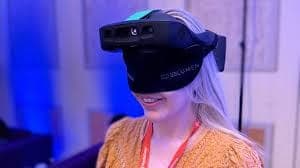
At CES 2026 in Las Vegas, technology that could reshape independence for visually impaired people stood out among the many futuristic gadgets on display. Romanian startup .lumen attracted considerable attention with its AI-enabled glasses for the blind, wearable technology that aims to bring a new era of mobility and autonomy to those with impaired vision.
.lumen’s glasses go beyond standard wearable tech by combining artificial intelligence, multiple vision sensors, and haptic feedback to help users navigate the world in real time. The device (designed to replicate the core functions of a guide dog) features six integrated cameras and a system that continually scans and interprets the environment. By detecting obstacles, identifying safe routes and communicating guidance through gentle vibrations, the glasses aim to help wearers move confidently without needing a cane, guide dog, or external infrastructure such as GPS maps.
Unlike many digital devices that rely on cloud connectivity, .lumen’s navigation technology runs entirely on the device itself. This local processing approach delivers ultra-low latency, which is crucial when avoiding sudden obstacles on busy streets or in crowded indoor spaces.
The potential impact of .lumen’s glasses extends far beyond CES booths and tech awards. For millions of visually impaired individuals, limited mobility can mean reduced access to education, work and everyday experiences. By translating spatial awareness into intuitive haptic cues, the device offers a new level of independence. A technology that doesn’t just assist with navigation, but empowers people to move confidently in real life.
The “self-driving” terminology isn’t just a clever hook, it reflects how AI, when responsibly applied, can open doors to real inclusion and tangible improvements in daily life. As this technology continues to evolve, it may redefine what accessible navigation looks like in the 2020s and beyond.
Boston Dynamics Unveils Next-Gen Atlas Robot to Transform Industry
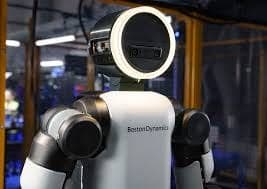
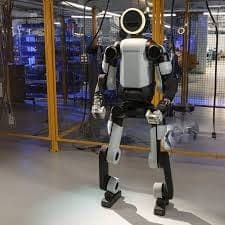
At CES 2026 in Las Vegas, Boston Dynamics officially introduced the production version of its Atlas humanoid robot, signaling a major shift toward practical, real-world industrial applications for advanced robotics.
From Research to Industry-Ready Machine
Boston Dynamics’ CEO Robert Playter said the new Atlas represents the company’s most advanced robot yet, one designed to revolutionize industrial work and pave the way toward robots that can safely help humans both in workplaces and everyday life.
Engineered for the Real World
Atlas is designed to tackle a wide range of industrial tasks, from material handling to order fulfillment, with adaptability and autonomy. Key capabilities include:
- Fast learning & adaptability: Atlas can quickly learn new tasks and replicate them across an entire fleet.
- Autonomous operation: It can navigate, work independently, and even self-swap batteries when needed.
- Flexible control modes: Operators can manage Atlas via autonomous mode, teleoperation, or a tablet interface.
- Strong performance: With 56 degrees of freedom, a 2.3 m reach, and a lift capacity up to 50 kg (110 lbs), Atlas performs reliably across varied environments.
- Robust design: Water-resistant and capable of operating from −20° C to 40° C, it includes human detection and safety features for shared workspaces.
AI Partnership and Supply Chain Support
A new collaboration with Google DeepMind will bring advanced AI foundation models into Atlas, enhancing its cognitive capabilities for complex tasks. Meanwhile, Hyundai Mobis will supply critical actuators and help build a robust industrial supply chain for large-scale production.
A New Chapter in Industrial Automation
The debut of Atlas’s production version marks a milestone in humanoid robotics. Shifting the focus from research prototypes to robots designed for practical, repeatable industrial tasks.
As Atlas begins its journey from concept to real-world application, the vision of intelligent, autonomous robots supporting complex operations in factories, warehouses, and other enterprise environments is drawing closer to reality.
Innatera Taps VLSI Expert to Lower Barriers to Neuromorphic Adoption
Bringing Brain-Inspired Computing Into the Mainstream
Innatera, a Dutch neuromorphic computing startup, is taking a strategic step to help accelerate the broader adoption of neuromorphic technology in the semiconductor industry by partnering with VLSI Expert, a training and skills organization active in both India and the U.S..
Despite the rapid growth of AI, neuromorphic computing (which mimics how the human brain processes information) still faces challenges that slow its wider use. Gaps in software ecosystems, technical know-how, and differing spiking paradigms make it difficult for developers and researchers to collaborate effectively and build practical solutions.
Innatera’s collaboration with VLSI Expert aims to change that by creating hands-on learning opportunities that lower the entry threshold for engineers and students interested in spiking neural networks and event-based computing.
Pulsar Platform: The Heart of Practical Neuromorphic Training
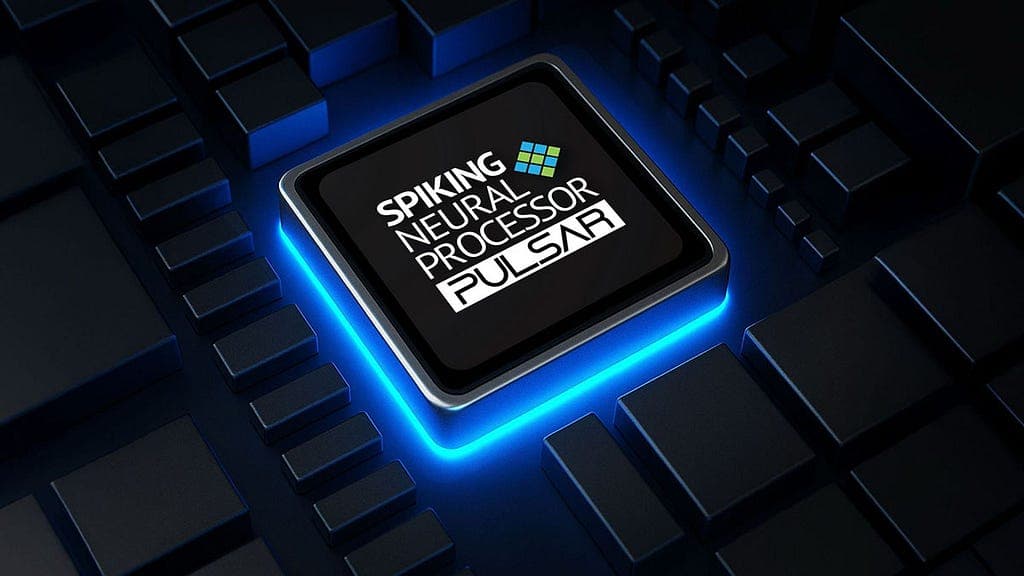
At the core of this initiative is Innatera’s Pulsar neuromorphic platform, a hardware system with both analog and digital spiking neural accelerators capable of processing sensor data in endpoint devices. This technology enables ultra-low-power, real-time sensing, making it ideal for next-generation applications in wearables, IoT sensors, industrial automation, and smart cities.
To complement the hardware, Innatera offers the Talamo SDK, which integrates with popular machine-learning tools like PyTorch and TensorFlow. This software support gives users deep access to both hardware and software needed to experiment with neuromorphic workloads as part of an educational or professional training program.
Hands-On Learning to Build Real Skills
Under the partnership, VLSI Expert will design and deliver development kits that include:
- Hands-on training modules
- Technical demonstrations
- Lab exercises
These materials will be integrated into VLSI Expert’s curriculum, helping learners understand how neuromorphic processors work and how they can be applied across a range of real-world use cases.
Step for Neuromorphic Adoption
Innatera positions this initiative as a milestone for bringing neuromorphic computing out of specialized labs and into the hands of developers and professionals worldwide.
This educational focus not only bridges current gaps in skills and tooling, it also lays the groundwork for broader industrial adoption of neuromorphic technologies in the years ahead.
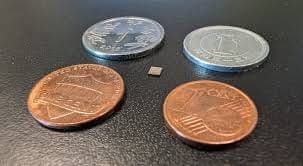
Size comparison of Innatera’s Pulsar chip.
Cooperation of the Giants

Apple has announced that it will use Google’s Gemini models and Google Cloud infrastructure to develop its next-generation artificial intelligence platform, called Apple Foundation Models. This move is expected to significantly enhance AI-powered features across the iPhone ecosystem, including Siri.
Between 2024 and 2025, Apple had been working in partnership with OpenAI. However, with this new agreement, Apple has changed its strategic partner and made Google its primary AI provider. Several important developments have emerged as part of this deal:
1) Google is licensing its Gemini models to Apple. Apple will run these models on its own Private Cloud Compute servers. This means that when you ask Siri to do something like “Create a video from the photos I took this week,” Siri will use Gemini in the background — but Google will never see your photos. All processing takes place within Apple’s secure, fully controlled environment.
2) Previously, Google paid Apple around $20 billion per year to remain the default search engine on iPhones. Now, it is rumored that Apple will pay Google $1–2 billion to use Gemini models instead. The fact that Google will both remain the default search engine and effectively become the “brain” behind its biggest competitor has led markets to comment that “Google has won the AI war.” This perception contributed to Alphabet’s market capitalization surpassing $4 trillion.
3) Siri is now moving far beyond simply “setting alarms” and is becoming a true digital assistant. With updates expected to arrive on iPhones in 2026, users will be able to say things like “Find and summarize the PDF my sister sent me last month,” or point their camera at a broken faucet and ask, “How do I fix this?” Siri will then guide them step by step, using Gemini Vision in the background.
Restriction of Imagination for the Protection of Moral Values

Earlier this month, Elon Musk shared an AI-generated image created by Grok that depicted him wearing a bikini, posting it on his X account with a smiling emoji. Shortly after, a trend began among Grok users to “turn everyone into someone wearing a bikini.”
Within days, the trend spiraled out of control. It was revealed that users had started generating explicit images of minors and non-consensual sexualized images of famous women. In response to heavy regulatory pressure from the United Kingdom and the European Union, Elon Musk and X’s AI team took two major steps.
1) Grok’s image generation feature was disabled for free users and restricted to Premium subscribers only. As of January 15, the “bikini transformation” feature was also removed entirely, even for Premium users.
2) Elon Musk announced on X that anyone using Grok to produce “illegal content” would face the same legal consequences as if they had personally uploaded illegal material themselves.
Don’t forget to follow us to get AI News alerts straight to your inbox!
Prepared by:
Leyla Yurtdaş and Salih Kaya
Contact us:
Mail: [email protected]
Instagram: https://www.instagram.com/ais.bau/
Linkedin: https://www.linkedin.com/company/ais-bau/posts/?feedView=all
Originally published on Medium
Read on Medium